


Relaxing or deep-tissue massage: how they differ and which to ask for
They don't differ in how hard they are, but in what each one is for: one brings the tone of the whole body down and the other goes to a specific area. How to know which is yours before you call — and why it's fine if you get the name wrong.
The difference isn't how hard it is. It's what you ask of the massage
Almost everyone asks for it by pressure: “a soft one” or “a firm one”. And that's not it. Both can press hard and both can be soft. What changes is what each one is for.
The relaxing one is there to bring your overall tone down. The whole body is worked over with a steady, continuous rhythm, without stopping anywhere, because stopping wakes you up. What it aims at isn't the muscle: it's getting you to slow down. That's why a lot of people fall asleep.
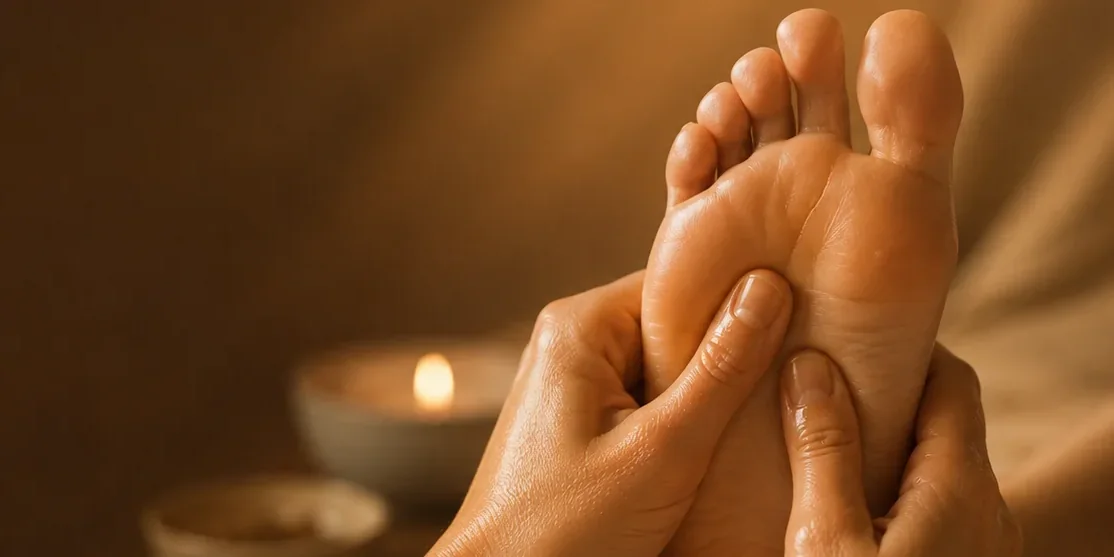
The deep-tissue one goes to a specific area. It stops right where the knot is —neck, trapezius, lower back— and works there, more slowly and with more pressure, until the muscle gives. It's local, and that's why it doesn't leave you with that floating feeling: it leaves your neck loose.
A note that avoids misunderstandings on the couch: a good deep-tissue massage isn't pressing until it hurts. If the muscle defends itself, it closes up and lets nothing go. It hurts a little, yes; full-on, no.
Which is yours: the two questions we're going to ask you
When you call, this is what we ask, and the answer settles it.
- Is something specific bothering you, or do you come tense all over? If you can point to it with one finger, it's deep-tissue. If the answer is “everything”, “my back” or “I don't know, I'm shattered”, it's relaxing.
- Since when? A few days' ache, with a clear spot, calls for local work. A tiredness you've been dragging for weeks, with no spot, isn't fixed by pressing one place: it calls for bringing the tone of everything down.
And there's a mixed case that's more common than it seems: you come in for the knot in your trapezius, but underneath it is three months without a break. There you start with the area and finish by loosening the rest. That's decided on the couch, not over the phone.
Half an hour or an hour
With the relaxing one, the difference is how much of the body we get to. The half hour is the quick switch-off: neck, upper back and little more, for when your body's warning you and you haven't got the morning free. The hour goes over the whole body without rushing, and it's the one that really changes your afternoon.
With the deep-tissue one, the hour is best the first time. It's not about selling you more time: before we can work on a knot we have to warm the area up, and going in cold on a seized-up muscle makes it defend itself, so you come out worse than you went in. The half hour makes sense later, once we know where your problem is and we're coming to keep it in check.
What you'll feel afterwards
You come out of the relaxing one soft, sleepy and with little urge to do anything useful. That's how it should be. If you can, don't line the session up with something that needs you sharp.
With the deep-tissue one you can come out with the area tender for a day or two, a bit like muscle ache after exercise. That's normal and it doesn't mean it was done badly: we've worked on tissue that had been protecting itself for a while. What's not normal is a sharp pain, one that gets worse or shows up where nothing was touched — that's worth telling us about.
The two things that help and cost nothing: drinking water that day and not fitting in a hard workout that same afternoon.
When neither of them is what you need
This is what hardly anyone tells you when they book you in, and it's the most important part of this guide. A therapeutic massage works the muscle: built-up tension and stiffness. It isn't physiotherapy, it doesn't diagnose and it doesn't replace being properly looked at.
Tell us when you call, because then yours is something else: pain that runs down the arm or the leg; tingling, numbness or loss of strength; pain after a knock or a fall; an area that's swollen, hot or red; a fever; or a pain that wakes you at night and doesn't change whatever you do with your position.
And this needs talking through beforehand: known thrombosis or circulation problems, significant varicose veins, an infection in progress, wounds or burns in the area, blood thinners, cancer treatment, recent surgery or pregnancy.
If you mention something from this list when you call, we'll tell you to have your doctor or a physiotherapist look at it first. It's not us dodging the work: with some of those things a massage doesn't help, and with a couple of them it does real harm.
What about the massage with radiofrequency?
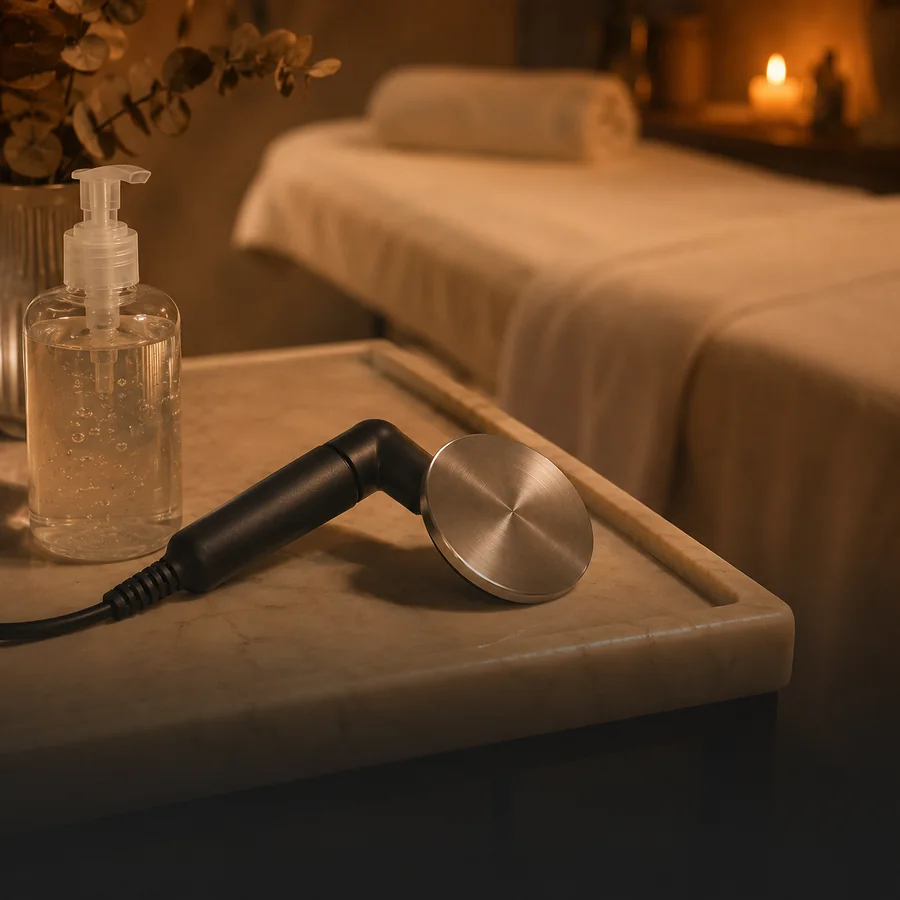
It's the hour-long massage with the Indiba working at the same time. The heat reaches far deeper than hands can, so the muscle arrives ready and you get further in the same time.
It's not the luxury option on the menu: it makes sense in one particular case, for someone who's been dragging the same area along for months and finds that the plain deep-tissue one only lasts three days. If you're coming in for this week's tension, you don't need it.
The only thing you have to say when you call
You don't have to get the name right. Tell us where it bothers you and since when, and we'll take care of choosing — that's what we ask for.
And if you book one and on the couch we see that yours is the other one, we switch right there. What we don't want is for you to not come just because you don't know what to call what's going on with you.
Other guides
 Beauty · 22 September 2026
Micropigmentation of brows and lips: you can have both done, but not at the same time
Beauty · 22 September 2026
Micropigmentation of brows and lips: you can have both done, but not at the same time
 Hair · 15 September 2026
Keratin on your hair: what the salon one does that the bottle from the shop doesn't
Hair · 15 September 2026
Keratin on your hair: what the salon one does that the bottle from the shop doesn't
 Hair · 8 September 2026
After a straightening treatment or keratin: the first few weeks decide how long it lasts
Hair · 8 September 2026
After a straightening treatment or keratin: the first few weeks decide how long it lasts