
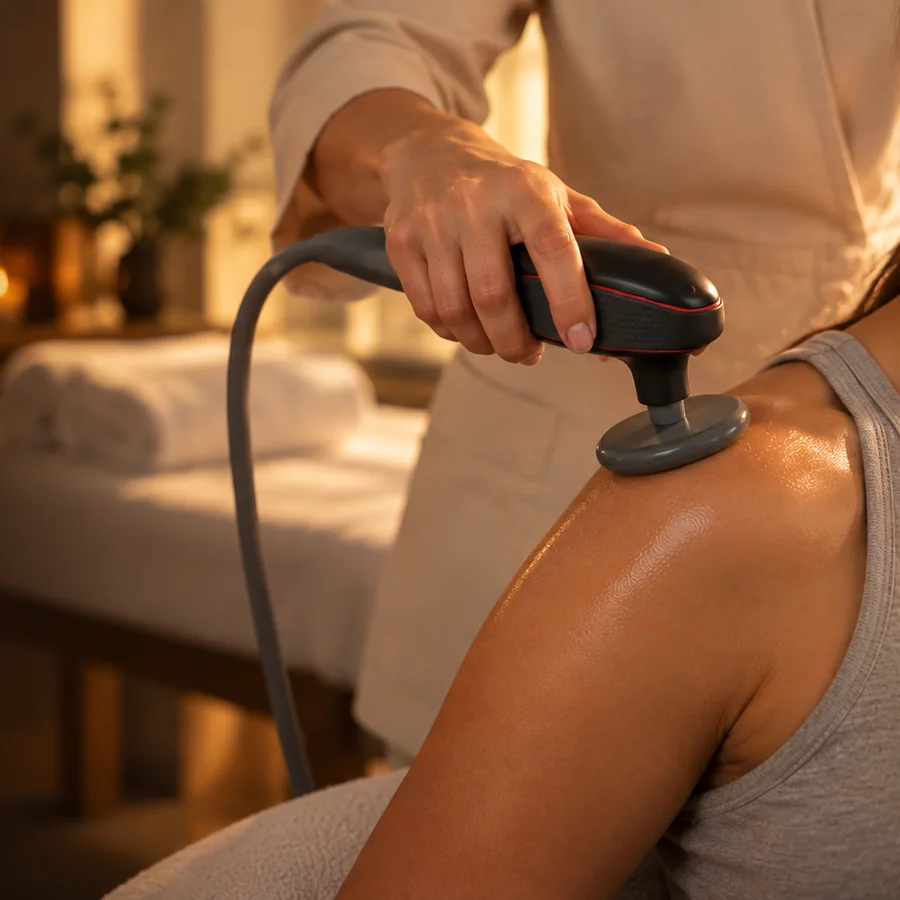
What INDIBA is, what it's for and what you feel in a session
Lots of people have heard of it and almost nobody knows what it does. What it is, what happens to your skin with the heat, what we use it for on the face and body, what it feels like on the couch and what it won't do no matter what an advert promises.
What it is: a brand, and a way of warming you from the inside
INDIBA is a brand. It was born in Barcelona in 1983, it makes radiofrequency machines and it's become so well known that many people call any radiofrequency by its name. Ours is the real thing: we work with an INDIBA EDNA PRO MAX.
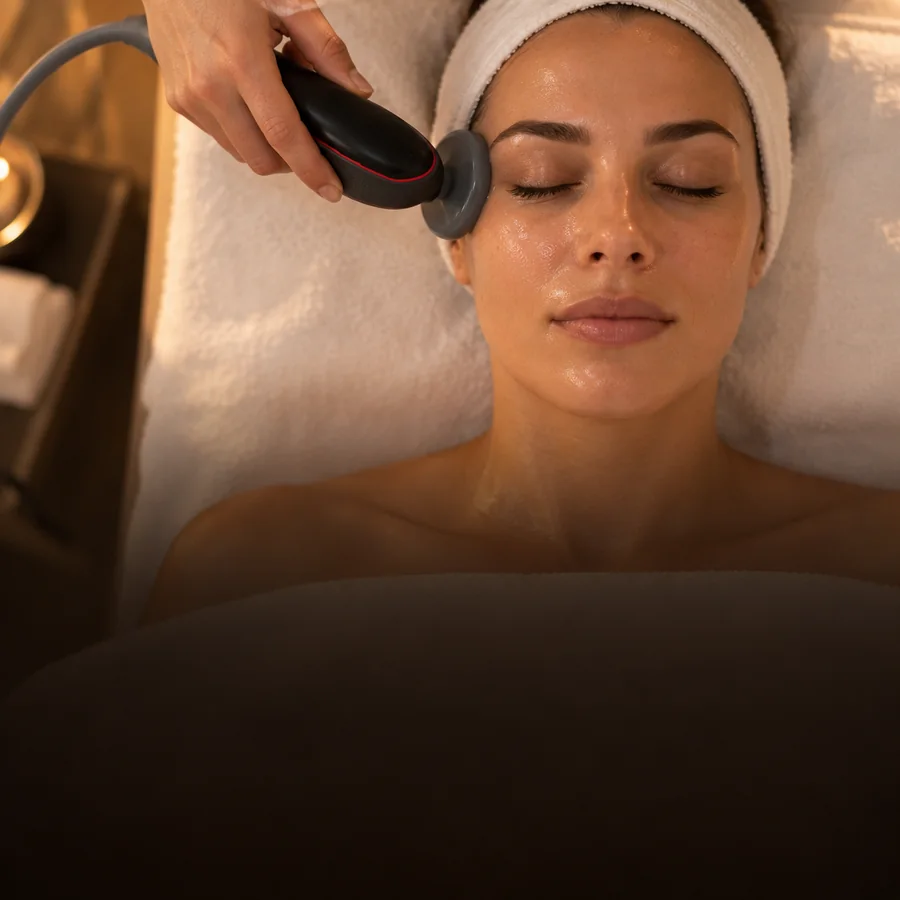
What it does is quick to tell. A 448 kHz current passes between the head resting on your skin and a plate in contact with your body, and along the way it warms the tissue from within. It doesn't cut, it doesn't prick and it leaves no mark.
What you feel is heat. Nothing else.
What happens to your skin with that heat
The machine has two ways of working, and both are used in one session. With the one called capacitive the heat stays close to the surface, in the skin and in what's just beneath it, and with the resistive one it reaches deeper, down to the denser layers, which is where the fat and the tissue that holds the skin up from below are. How long each one runs depends on the area and on what we're after.
Three things happen with the heat. The blood flows better through the area, and you see that straight away in the colour. The collagen you already have contracts, so the skin looks firmer. And the cells that make new collagen get to work, which is what really lasts, though it doesn't show up the next day but after a month or two.
One note that isn't usually mentioned. What that particular frequency does to cells has been studied mostly in the lab, with cultures, and the results are interesting: at the Ramón y Cajal Hospital there's a group that has been working on it for years. But a culture isn't a face. Here we stick with what has been measured in people, which is the heat, the circulation and firmer skin when you do the whole course.
What we use it for at the studio
It's the same machine for the face and for the body. The area, the intensity and the time change.
- On the face. For skin that has lost firmness, dull texture, fine lines and a jawline that's starting to blur. It also improves the look of bags and dark circles. If you're wondering whether a home machine would do for you, we explain it in the facial radiofrequency guide.
- On the body. Abdomen, thighs and buttocks: less firm skin, the look of cellulite or skin that has been left behind after losing weight.
- On the arms. The back is one of the first areas to lose firmness, and it has its own half-hour session.
- After pregnancy. To help the caesarean scar gain elasticity, for fluid retention and for a strained lower back, and as a companion to exercise if there's diastasis. Always once whoever is looking after your postpartum has given you the go-ahead.
- With massage. An hour of massage with the INDIBA working at the same time: the muscle arrives warm and the hands go further in the same time. When it makes sense and when it doesn't, in the massage guide.
Why so many people choose it
What matters most when someone decides is that it improves the skin with no needles, no surgery and no need to hide away at home for a few days. You get up off the couch and carry on with your day. At most, with slightly pink skin for a while.
It's also pleasant, which is no small thing. There are salon treatments you put up with, and this one you enjoy: many people half fall asleep.
And with the same machine you work on very different things, so it's useful for what worries you today and for what worries you a few years from now. It suits best anyone who notices their skin is less firm than before and doesn't want anything invasive, and anyone who has changed weight and wants their skin to catch up.
What it feels like on the couch
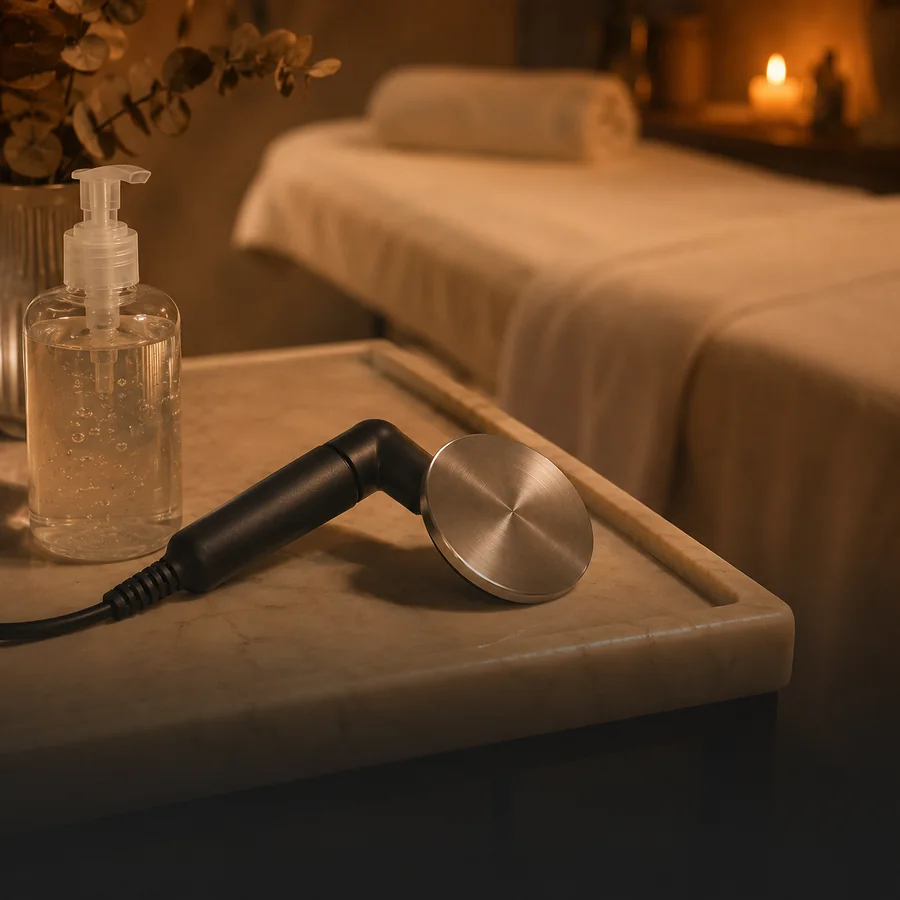
First a cream is spread on the area, which helps the head glide and the energy go in well. Then the head moves in slow circles, never staying still on one spot.
The heat builds up little by little. It's like a hot water bottle, only you feel it from inside and not on top. During the session we keep asking you, and it's turned up or down according to what you tell us.
It has to be a heat you're comfortable with. If at any point it burns or stings, say so. It's turned down at once and nothing is lost. Gritting your teeth doesn't give a better result.
When it's over, the skin is left warm and a little pink, and that goes in a while. You can go back to work. That day, drink water.
How many sessions you need, and when you notice it
You already see something the same day. On the face, more colour and firmer skin; on the body, smoother skin. It's real, but it goes in a few days.
What lasts comes with the course. On the face we usually talk about six to ten sessions, one a week at first, and on the body about ten, one or two a week depending on how the skin responds. Once it has got to where we wanted, you move to maintenance: one session every three or four weeks.
The exact number doesn't come from this guide. It comes from seeing you at the first appointment.
What it won't do
We always tell you this part, because it's the one that saves you from disappointment.
It doesn't make you lose weight. It can slim an area a little and leaves the skin firmer, but the scales don't move. If what you want is to lose volume, that comes through food and movement, and for that at the studio we have nutrition and diet advice and personal training. INDIBA goes very well alongside that work. It doesn't replace it.
It doesn't get rid of cellulite. It improves its look and the texture of the skin, and with consistency you notice it, but if anyone promises you it disappears, be wary.
Nor is it a lift. Very marked sagging or a settled double chin are played down with heat; fixed, they're not.
And the result lasts as long as you look after it. If you stop coming, the skin carries on ageing at its own pace: what you've gained isn't lost all at once, but it doesn't freeze either.
Who can't have it
Before the first session we ask you a few questions, and it's not paperwork. We're putting heat and current into the body, and there are cases where it isn't advisable.
With a pacemaker or any implanted electronic device, no. There are no exceptions here. Not during pregnancy either, nor with an active cancer or one under treatment, nor with thrombosis or clotting problems.
There are other things we talk about before starting: epilepsy, areas where you can't feel heat properly, metal implants where we're going to work, a copper IUD if we work on the abdomen, wounds, or an infection or a skin flare-up in progress. And if you've recently had hyaluronic acid or toxin in your face, we let a couple of weeks go by.
If you have any doubts about any of them, ask when you call. We'd rather say no over the phone than give you a session that isn't right for you.