
This offer has ended
If you're interested, give us a call and we'll tell you all about it. And if you'd like to hear about the next one, we'll let you know by email.
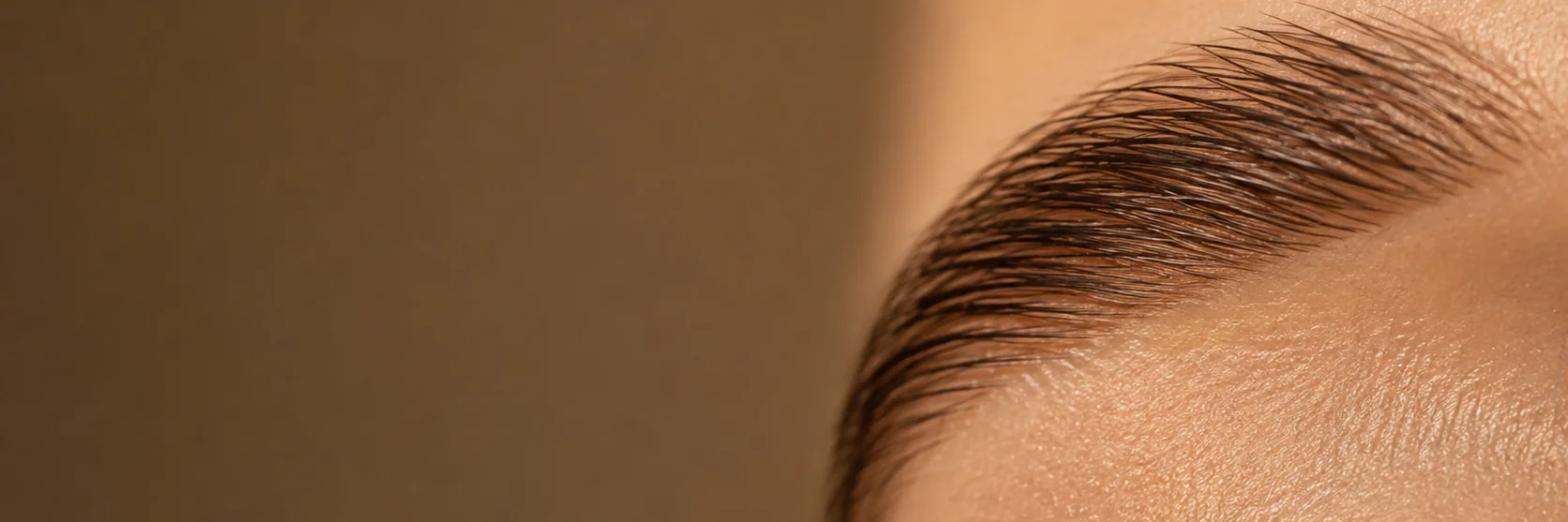
Hair by hair eyebrow micropigmentation: what it is and how long it really lasts
What exactly is done, what you'll see in the mirror each week while it heals —including the weeks when the colour softens— and how long it lasts before you need a touch-up.
What it is exactly
Pigment is implanted into the most superficial layer of the skin, stroke by stroke, imitating natural hair. It's not a tattoo: a tattoo goes much deeper and is forever. This stays up top, where the skin renews itself, and that's why it fades over time instead of sitting there ageing with you.
It fading isn't a flaw, it's the whole point. An eyebrow that suited you twenty years ago doesn't suit you today, because the face changes and so do the fashions. If it fades, it can be corrected.
“Hair by hair” is one of the ways of doing it, the one with fine strokes, one by one. The other is shading, which blends colour as if you'd used a soft pencil. And they can be combined. Which one is right for you isn't something you pick from a photo: your skin decides, and I explain that below.
What happens before the first pass
Before pigmenting anything, we do the visagism: the study of your face shape so the design turns out harmonious and natural.
We look at which shape suits your face —where the brow should start, where it should rise and where it should end according to your oval and the height of your eyes—, and we draw over it with pencil until the two agree. Then I show it to you in the mirror and the machine isn't touched until you say yes.
A heads-up that saves disappointment: your eyebrows aren't twins, they're sisters. Nobody has two the same, because the face isn't symmetrical. The aim is for them to balance out, not to be identical; forcing exact symmetry is precisely what makes an eyebrow look painted on.
And then there's the colour, which is where bad jobs show up years later. The pigment is chosen according to your skin's undertone and how it will fade as it loses intensity. Chosen by eye, a brown can turn reddish or grey after a year.
The healing, week by week
This is the part nobody tells you about and the one that generates the most panicked calls. This is what's going to happen, and it's all normal:
- Days 1 to 3. You see them darker and thicker than you expected. Always. The skin is inflamed and the pigment is still on the surface. It's not the result.
- Days 4 to 10. A thin film forms that feels tight and itches a little, and it starts to flake off. Don't touch or scratch it: if you take the scab off too soon, you take the pigment underneath with it and you're left with a gap there.
- Weeks 2 to 4. The colour settles in under the new skin and looks softer, sometimes quite a bit softer than you expected. That's normal: that skin is still opaque.
- Week 5 or 6. Now you see the colour that stays, softer and more yours. This is the real result, and it's time for the touch-up.
Count on that touch-up from the start. The first session sets the shape and the second adjusts whatever the skin has rejected, which is always something and never the same in two people. A micropigmentation isn't finished until the second appointment.
How long it really lasts
Between one and three years before you need a maintenance touch-up, and that range is so wide because it depends above all on your skin type, and then on how you treat it.
It goes sooner on oily skin, which pushes the pigment out and blurs the stroke; with lots of sun without protection, which lightens it; with acids, retinol or peels on the area, which are exfoliants and do exactly their job; and on young skin, which renews itself faster. It lasts longer on dry or normal skin, out of the sun and with the area respected.
About oily skin, the important thing: it's not that you can't have it done, it's that pure hair by hair isn't for you. The fine strokes open up and in a few months they look like a smudge. On that kind of skin we suggest shading or a combination, which holds much better. If someone sells you hair by hair without looking at your skin, they're gambling with your face.
When it can't be done, and when you just have to wait
Not now: pregnancy and breastfeeding; an active cold sore or dermatitis on the area; sunburnt skin; isotretinoin, which needs six months from when you finish it; strong acids or recent peels on the forehead; and botox or filler on the area, which needs a couple of weeks before and after, because it moves the position of the eyebrow.
It needs talking through first: poorly controlled diabetes, anticoagulants, ongoing cancer treatment, a tendency to keloids, clotting problems or known allergies to pigments or nickel. In some cases your doctor's go-ahead is needed, and it's not to cover ourselves: it's that we're opening the skin on your face.
All of this is asked about in the assessment and goes in writing with your consent before we start.
The days afterwards are down to you
It's a small thing, but it's half the result. The exact guidelines are given to you by whoever does it, on the day of the appointment. The basic ones are the same everywhere: don't wet, don't apply make-up and don't rub the area, not even when drying your face; no gym, sauna or pool while it heals, because sweat and chlorine eat away freshly applied pigment; and don't scratch or pull off the scab even if it itches.
After that, sun protection on the brows for the rest of their life. It's what's most in your hands to make them last.
Why you won't see before and after photos
Because they're our clients' eyebrows and their face is theirs, not advertising material. We'd rather tell you about it in words and show you at the appointment, on your own pencil drawing, which is where you'll really see whether you like it or not.
And if, at the assessment, we see that what you want won't suit you, we'll tell you. It's the face you go out with every day for the next two years.